

Impact & Publications
FAST-Infra Group, Paris, 2025 to present
-
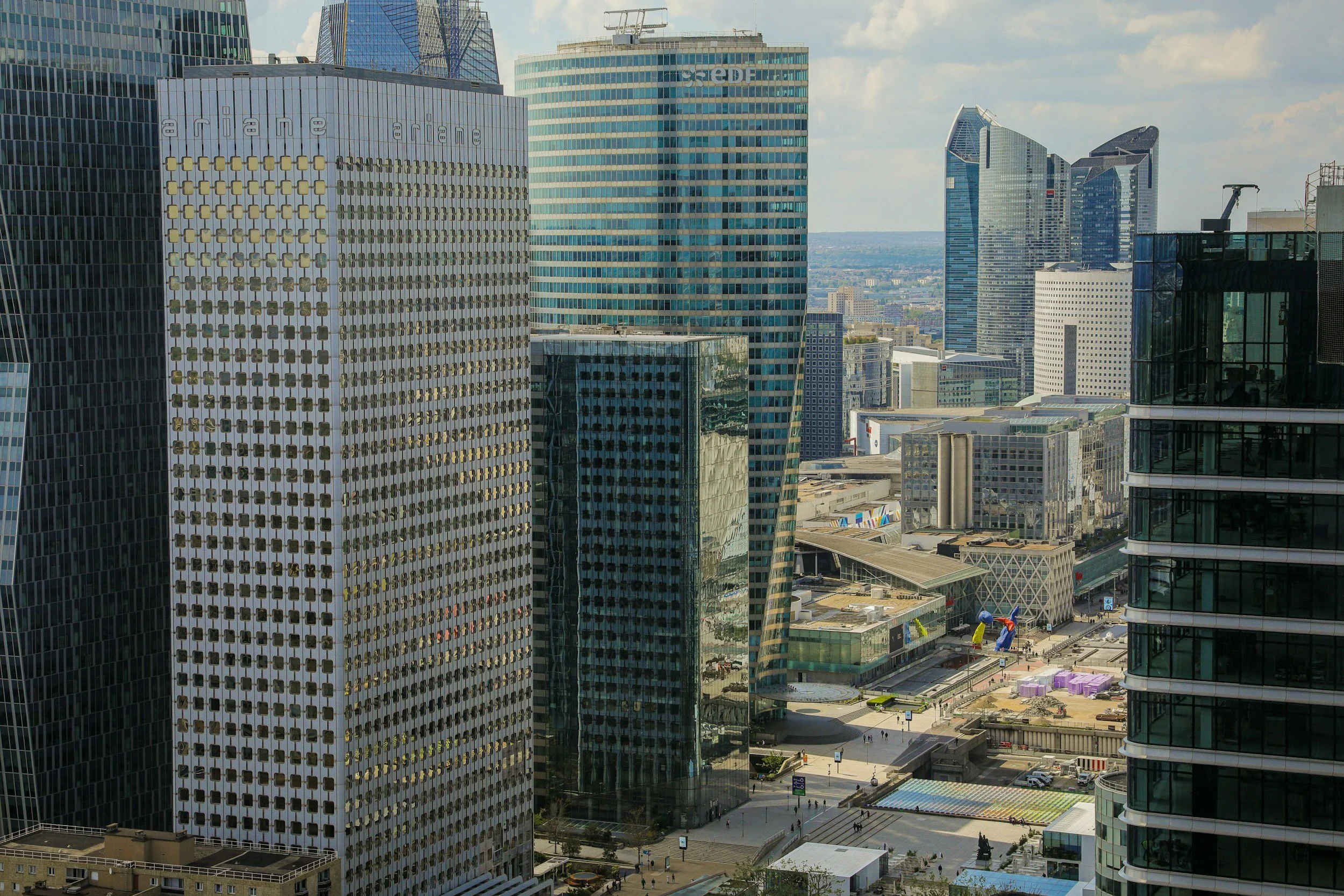
Secretary General, FAST-Infra Group, Paris, 2025–present
Since September 2025 I have run the Paris secretariat of FAST-Infra Group, the non-profit association that owns the FAST-Infra Sustainable Infrastructure Label and brings together more than a hundred public and private institutions. The role covers the governance of the Label with Global Infrastructure Basel and Bloomberg, the grant relationship with the French Treasury, membership and partnerships, and the Group’s public voice. Over the year the coalition welcomed Proparco and Bankers without Boundaries as members, partnered with KPMG Middle East on adoption across the Gulf, saw the Label added to the ITC Standards Map, and published its H1 2026 review: 146 projects across eleven countries, worth around USD 15 billion, self-assessed against the Label in six months.
-
Standards for Development Finance: COP30, the IDFC and Finance in Common, 2025–2026
Public development banks provide the largest share of infrastructure finance in emerging markets, so their adoption of a common sustainability standard matters more than anyone else’s. At COP30 in Belém, FAST-Infra ran a session at the IDFC Pavilion on how standards help public development banks unlock public and private capital, and in June 2026 we presented the initiative and the Label to the IDFC’s climate working group in a webinar hosted with AFD. The Finance in Common Summit in Paris in April 2026 put coordination around shared standards at the centre of the agenda. The same year I presented the initiative to the Moldovan government with the French Treasury, to Syntec Ingénierie and to the Syndicat des énergies renouvelables, and at PPP Week in Istanbul, where the Blue Dot Network and the FAST-Infra Label shared a stage for the first time.
-
Making Resilience Investable: Insurability, Resilience Metrics and Investment Decisions, 2026
Physical climate risk is now priced by insurers long before it is priced by lenders, and the gap between the two is where resilient projects fail to close. Through 2026 I have worked on narrowing it: taking part in the World Bank Group’s thematic session on resilient infrastructure in Paris, co-organised with AXA Climate, where the IFC and the Global Infrastructure Facility published new evidence on the returns to resilience investment; convening investors and insurers at London Climate Action Week with Pinsent Masons on whether sustainability and resilience drive financial performance; and co-hosting, with the Africa Infrastructure Fellowship Programme, the Paris InfraWeek session “Making Resilience Investable: from resilience metrics to investment decisions” on 2 November 2026. Alongside this sits FAST-Infra’s insurance working group and the evidence base we are building on whether labelled projects secure better access to finance and better terms.
Reports, Case Studies, Events & Strategic Engagements
-

Financing Nature-Positive Linear Infrastructure: A Framework for Financial Institutions, WWF, 2024
Authored a framework as part of Asia’s Linear Infrastructure safeGuarding Nature (ALIGN) Project, funded by the United States Agency for International Development (USAID) and in collaboration with the Center for Large Landscape Conservation, which serves as a critical tool for guiding financial institutions (FIs) towards nature-positive outcomes. Drawing on international best practices in nature-positive infrastructure investing, the framework provides a step-by-step approach to help FIs minimise environmental impacts while contributing to ecosystem protection, restoration, and regeneration. Built around the ‘6Ps’ of environmental and social integration – Purpose, Policies, Processes, Products, People, and Portfolio – it offers a holistic roadmap for FIs to integrate nature-positive principles across their operations, from policy development to portfolio management.
-

Biodiversity & Infrastructure Investing: How Infrastructure Investors are Factoring Biodiversity Impacts into Decision-Making, WWF & Oliver Wyman, 2024
Co-authored a white paper with Oliver Wyman which examines why biodiversity loss deserves the same level of attention as climate change. The paper highlights the growing awareness and evolving regulations in this area. It explores how investors can utilise existing tools to address biodiversity risks and discover new opportunities. Best practice case studies demonstrate how leading investors are integrating biodiversity considerations throughout the investment process, continuously raising the bar and proving that positive change is achievable. The paper is a critical resource for infrastructure investors and advisors. By making biodiversity central to investment decisions, we can protect our planet’s life support systems, ensure the resilience of essential infrastructure, and drive sustainable development.
-

Charting the Course for Clean Energy Investment in East, South and Southeast Asia, Tara Climate Foundation, 2024
Delivered an in-depth report assessing the investment and lending practices of 15 National Development Finance Institutions (NDFIs) across 10 Asian countries (Indonesia, the Philippines, Vietnam, Malaysia, Thailand, Bangladesh, Pakistan, Japan, South Korea, and Taiwan) in the clean energy sector. The study identifies key opportunities and challenges in scaling up clean energy finance while navigating the complexities of expanding NDFI investments in renewable energy and energy efficiency. By concentrating on institutions with substantial energy portfolios or a strategic focus on energy infrastructure, the analysis underscores their current capacity and outlines pathways for future investments critical to advancing a low-carbon economy.
-

Advancing Nature-Positive Infrastructure at the Infrastructure Investor Global Summit – Berlin, 2022-2024
I represented WWF at multiple editions of the Infrastructure Investor Global Summit in Berlin, where we positioned nature-positive infrastructure as a central theme in investor discussions. Together with partners such as The Nature Conservancy, FAST-Infra, and the Global Infrastructure Basel Foundation, we advocated for the integration of biodiversity and climate resilience into infrastructure investment strategies.
Our participation included high-level panel discussions, a curated investor reception where we delivered in-depth presentations on nature-integrated infrastructure, and a booth in the main exhibition space that served as a hub for one-on-one engagement. Through these efforts, we helped bring ESG integration tools—such as the FAST-Infra Sustainable Infrastructure Label—into the spotlight and contributed to mainstreaming nature considerations within global infrastructure finance.
-

Asia Sustainable Finance Initiative (ASFI) Academy, WWF, 2021-2024
As part of WWF-Singapore, I contributed to the evolution of the Asia Sustainable Finance Initiative (ASFI) Academy’s e-learning portfolio by spearheading the design of specialised modules on sustainable finance in the infrastructure and energy sectors. In 2024 I led the development of a new course on natural resource safeguards for financial institutions, equipping participants to strengthen safeguard policies and processes in line with international biodiversity and nature conservation commitments. The self-paced course is accredited under the Singapore Institute of Banking and Finance Standards Training Scheme (IBF-STS). The ASFI Academy, a collaborative effort between WWF-Singapore and ASFI partners, remains a key resource for practitioners navigating sustainable finance in Asia.
-

FAST-Infra Sustainable Infrastructure Label — Finance to Accelerate the Sustainable Transition-Infrastructure Initiative, WWF, HSBC, OECD, IFC, GIF & CPI, 2020–present
From 2020 to 2024, as part of WWF, I was actively involved in developing a new and globally applicable sustainable infrastructure label for projects demonstrating significant sustainability performance. The work sat within a multi-stakeholder working group led by the Global Infrastructure Facility (GIF) and Macquarie under the FAST initiative, which aims to close the trillion-dollar sustainable infrastructure investment gap by transforming sustainable infrastructure into a mainstream, liquid asset class. Since 2025 I have led the Secretariat of FAST-Infra Group, the Paris-based association that owns the Label, overseeing its international deployment, convening investors, development banks and policymakers on innovative and blended finance, and representing the initiative at international forums including COP30 and the OECD Infrastructure Forum. The Label enables developers and operators to demonstrate the positive impact of infrastructure assets and gives investors a credible, impartial and technically rigorous basis for trust in sustainable infrastructure investments.

Empowering Key Development Finance Institutions in Asia to Accelerate the Decarbonisation of the Energy Sector, WWF, 2023
Delivered a report for WWF-Singapore that summarises the latest findings of an assessment of Development Finance Institutions (DFIs) with a majority shareholding structure comprising Japan, China, Indonesia, the Philippines, Malaysia, and India. It also provides recommendations to help DFIs align their overall governance structure, financing strategy, sector policies, products, people management, and portfolio disclosures with the Paris Agreement and the Kunming-Montreal Global Biodiversity Framework (GBF).

The Role of National Development Finance Institutions in Accelerating Southeast Asia’s Clean Energy Transformation, WWF, 2022
Delivered a white paper for WWF-Singapore which highlights the importance and opportunity, as well as the current progress in aligning ASEAN National Development Finance Institutions’s (NDFI) energy-related financing decisions with the Paris Agreement. It provides an overview of findings from a baseline assessment of four NDFIs in Indonesia, the Philippines and Viet Nam, along with broad recommendations for developing and implementing science-based, energy transition processes for direct and indirect investments.

Mapping ESG Integration in Public Infrastructure Finance, WWF & ADFIAP, 2021
Delivered a report for WWF and the Association of Development Financing Institutions in Asia and the Pacific (ADFIAP), which documents the way Development Finance Institutions (DFIs) in the Asia Pacific region, predominantly involved in infrastructure investment, are integrating climate- and biodiversity-related risks and opportunities, into their decision-making systems. The report found that awareness of climate change is growing, but still needs to be better embedded into most DFIs’ strategies. Biodiversity loss has not yet attained the same level of awareness.

Incorporating Sustainability into Infrastructure Investments, Oliver Wyman & WWF, 2020
Completed a report that surveyed major infrastructure investors to explore current trends and leading practices for integrating climate and nature-related environmental, social, and governance factors within infrastructure investing. The report found that almost half (48%) of investors are screening out at least one type of unsustainable asset, mainly coal. The top motivation for integrating ESG among investors was financial returns, followed by risk management. All investors surveyed plan to continue their ESG integration in the future.

Dynamic Resilience To Extreme Weather, World Energy Council, 2019
Developed a case study library in collaboration with Swiss Re Corporate Solutions and Marsh & McLennan Companies which meticulously analyses system failures induced by such events, delineates their impacts, and distils invaluable lessons from both mitigation and recovery efforts. Notably, the library encompasses best practices within the energy sector, facilitating the cultivation of more agile and adaptive responses to extreme weather events and mitigating the impacts of natural hazards on energy systems.

The Khurdopin Glacier Surge, Utrecht University, 2018
Worked on a study, which used digital elevation models and Landsat imagery in combination with high-resolution imagery from the Planet satellite constellation to quantify surface elevation changes and flow velocities during a glacier surge of the Khurdopin Glacier in 2017. Results reveal that an accumulation of ice volume above a clearly defined steep section of the glacier tongue since the last surge in 1999 led to a rapid surge in May 2017 peaking with velocities above 5000 m a−1, which were among the fastest rates globally for a mountain glacier.

Electrical Grids and Storage Green Bond Standard, Climate Bonds Initiative, 2018
Spearheaded the development of a new green bond standard focusing on energy transmission and distribution systems. Orchestrated collaborative efforts by assembling diverse teams of technical experts from both industry and academia. Collected insights into best practices within the realm of electrical green technologies. Translated complex information into accessible formats, disseminating key findings to stakeholders through comprehensive reports, engaging newsletters, and insightful blog posts.

Rethinking Decarbonisation Incentives – Policy Case Studies, Ricardo Energy & Environment, 2018
Provided technical support for the development of a case study that aimed to explore the effectiveness of a carbon tax policy in South Africa. The study focused on the challenges faced, both technical and political, in delivering a consistent carbon price signal throughout the economy. My responsibilities included conducting a literature review, delivering semi-structured interviews, analysing data and writing the final report.

Annual Performance Reviews of Thames and Anglian Water for Ofwat, Ricardo Energy & Environment, 2018
Provided technical input for a variety of asset management plans within the UK water industry, to comply with the 5-year price review mandated by the UK water regulator, Ofwat. My work included conducting literature reviews, geospatial analysis, policy analysis, natural capital accounting, strategic environmental assessments, cost-benefit analysis, habitat regulations assessments, and water framework directive assessments.

Mid-term Review of the UK’s Transforming Energy Access Programme, Ripple Economics & Carbon Trust, 2018-2019
Delivered a mid-term review for the UK Department for International Development’s Transforming Energy Access (TEA) programme, a research and innovation platform supporting the technologies, business models, and skills needed to enable an inclusive clean energy transition in Africa. The mid-term review provided external, independent advice on the programme's response to the energy access challenge and its theory of change. It assessed the collaboration among different implementers, cooperation with other DFID programmes in the energy access sector, the perception of external stakeholders, and TEA's communication of its activities at both programme and implementer levels. Additionally, it evaluated potential future funding gaps, overlaps with other initiatives, and areas needing more or less emphasis.

Policy Options for Regulating Carbon Emissions from New Passenger Vehicles, Ricardo Energy & Environment, 2018
Offered technical support to the European Commission's Directorate-General for Climate Action (DG Climate Action) in formulating the impact assessment for the post-2020 policy framework governing CO2 emissions from new passenger cars and vans. The project involved a meticulous analysis of different policy design criteria, and the findings were instrumental in supporting the impact assessment that forms the foundation of the European Commission's proposal for post-2020 regulatory CO2 targets for cars and vans. The goal was to contribute substantively to the development of an effective and well-informed regulatory framework that addresses the challenges posed by CO2 emissions in the automotive sector.

Evaluation and Design of Nepal’s Off-Grid Renewable Energy Programme, Ricardo Energy & Environment, 2017
Collaborated on an initiative involving the analysis of contextual factors, assessment of the existing rural renewable energy programme, and the conceptualisation of an innovative alternative to enhance energy accessibility for marginalised communities in Nepal. The primary objective was to shift the country from a subsidy-centric model to a market-driven system. In my role, I played a vital supporting role to the Technical Lead, contributing research expertise to develop strategy papers and mechanisms addressing governance, donor coordination, results aggregation, and financial tracking. These initiatives were integral in facilitating the successful implementation of Nepal's transformative renewable energy programme.
